
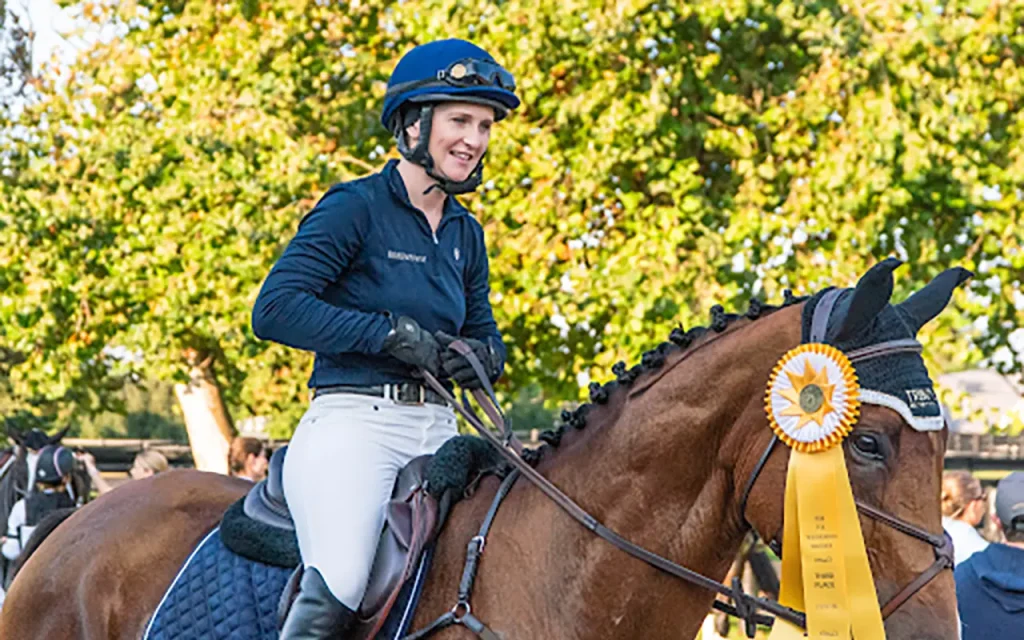
Anyone who spends enough time around horses knows how quickly they can pick up on the energy around them.
A rider walks into the barn after a stressful day. Their shoulders are tight. Their breathing is shallow. Their movements are a little quicker than usual. They may not say a word, but their horse is already paying attention.
The same can happen in the other direction. A horse that is tense, distracted, uncomfortable, or on high alert can cause a rider to tighten their body, shorten the reins, hold their breath, or anticipate something going wrong.< Horse and rider are two separate nervous systems, but when they work together, stress in one can influence the entire partnership. That’s why supporting relaxation and recovery shouldn’t stop with the horse. MagnaWave helps bring PEMF into the horse’s wellness routine, while AuraWell brings PEMF to the human side of the partnership.
What Stress Looks Like in People
Stress isn’t always obvious. Sometimes it looks like worry or nervousness, but it can also show up physically.
A stressed rider may experience muscle tension, a clenched jaw, elevated heart rate, shallow breathing, difficulty concentrating, restlessness, fatigue, or trouble relaxing.
Those physical changes matter when you’re working with a horse. Riding depends heavily on subtle communication through your seat, legs, hands, breathing, posture, and balance. When your body becomes tense, those signals can change.
You may think you’re telling your horse, “Everything is fine,” while your body is communicating something very different.
What Stress Can Look Like in Horses
Horses are highly responsive animals, and their stress signals can range from very subtle to easy to recognize.
Depending on the horse and situation, you might notice a raised head, tense muscles, tail swishing, pinned ears, increased movement, difficulty standing quietly, changes in breathing, excessive alertness, reluctance to move forward, or difficulty settling and focusing.
Stress isn’t necessarily a sign that something is “wrong” with a horse. A new environment, hauling, competition, changes in routine, unfamiliar horses, physical exertion, or even activity around the barn can all contribute to temporary stress.
The important part is learning to recognize what your individual horse looks like when relaxed versus when they’re feeling tense or overwhelmed.
The Horse-and-Rider Feedback Loop
This is where the connection between horse and rider becomes especially important.
Horses constantly respond to information from their environment, including information coming from their rider. Researchers have even explored physiological synchronization between horses and humans during interaction.
Think about approaching a spooky corner of an arena.
The rider anticipates the horse reacting, so they tense their legs and shorten the reins. The horse feels the rider’s body change and becomes more alert. The rider feels the horse tense and braces even more.
Now both horse and rider are reinforcing the other’s tension.
The opposite can happen, too.
A rider who slows their breathing, softens their body, and stays consistent can communicate differently. As the horse begins to settle, the rider may relax further.
Instead of escalating tension, they begin creating a cycle of relaxation.
Why Relaxation and Recovery Matter for Both
Stress is a normal part of life for both horses and people. The goal isn’t to eliminate it completely. It’s to create opportunities to relax and recover after periods of physical or mental demand.
For horses, that may include quiet grooming, walking, stretching, appropriate rest, nutrition, hydration, consistent routines, bodywork, and other wellness modalities.
For riders, recovery might include sleep, hydration, stretching, mobility work, quiet time, breathing exercises, and wellness technologies that make it easier to intentionally slow down and recover.
PEMF can fit into both sides of that routine.
MagnaWave for the Horse
MagnaWave Pulsed Electromagnetic Field (PEMF) sessions are commonly incorporated into equine wellness and recovery routines to support relaxation, circulation, muscle function, and the body’s natural recovery processes.
One of the most recognizable parts of a MagnaWave session is often simply watching how a horse responds.
Some horses lower their heads, lick and chew, yawn, stretch, shift their bodies toward the applicator, or simply stand quietly and settle into their session. Every horse responds differently, but these moments of relaxation are one reason so many owners, riders, trainers, and practitioners incorporate MagnaWave into their routines.
Whether you’re preparing for a competition, recovering after a demanding ride, traveling, training, or simply maintaining a regular wellness routine, MagnaWave provides an opportunity to focus on the horse’s side of the partnership.
But what about the person standing next to them?
AuraWell for the Rider
That’s where AuraWell comes in.
AuraWell brings PEMF to the human side of the horse-and-rider partnership, giving riders an easy, portable way to incorporate PEMF into their own wellness and recovery routines.
Riders are athletes, too. Hours in the saddle, lifting feed bags, mucking stalls, hauling equipment, traveling to shows, working long days, and balancing everything outside of the barn can take a toll.
And sometimes what a rider needs after a demanding day is the same thing we’re trying to give our horses: an opportunity to slow down, relax, and recover.
AuraWell is designed for everyday use, bringing clinical-strength, FDA-cleared PEMF into a portable system that fits into real life. It can become part of a rider’s routine before or after time in the saddle, at home, at the barn, or while traveling.
While your horse settles into a MagnaWave session, you can make recovery part of your routine with AuraWell.
Horse and rider. Both taking a moment to reset.
A Wellness Routine for the Whole Team
We spend a lot of time thinking about what our horses need to perform, recover, and feel their best.
What if we gave ourselves that same attention?
Imagine finishing a long training day or competition. Your horse receives a MagnaWave session as part of their recovery routine while you take time for your own recovery with AuraWell.
Instead of focusing only on one athlete, you’re supporting the entire team.
MagnaWave for the horse.
AuraWell for the rider.
Two PEMF systems designed for two different sides of the same partnership.
Two Bodies. Two Nervous Systems. One Team.
Your horse notices more than you may realize.
The way you breathe. The way you move. The amount of tension you’re carrying. The confidence or hesitation in your body.
And you’re constantly reading your horse in return.
That ongoing conversation is part of what makes the horse-and-rider relationship so unique.
Stress is normal for both of you. Making relaxation and recovery intentional can help support the physical and mental readiness you bring into your time together.
MagnaWave gives you a way to incorporate PEMF into your horse’s wellness routine.
AuraWell gives you a way to make PEMF part of yours.
Because when two athletes and two nervous systems are working together, recovery shouldn’t be one-sided.
Learn more about MagnaWave for your horse at MagnaWavePEMF.com and discover AuraWell for yourself at AuraWell.com.
MagnaWave PEMF is intended to support animal wellness and recovery and is not a substitute for veterinary care. AuraWell is intended for human use. Persistent anxiety, behavioral changes, pain, or other health concerns should be discussed with an appropriate veterinary or healthcare professional.